Now these lyrics have power! Though this song was written 200 years ago it has tremendous power today. I recently heard a contemporary rendition - very nice.
Think of Christ's words in John 15 "I call you no more servants...but friends..." To think that through the Son of God we can obtain a "righteousness freely chosen."
This is good stuff!
To see the Law by Christ fulfilled,
To hear His pardoning voice,
Changes a slave into a child
And duty into choice.
No strength of nature can suffice,
To serve the Lord aright
And what she has, she misapplies,
For want of clearer light.
How long beneath the Law I lay,
In bondage and distress
I toiled the precept to obey,
But toiled without success.
Then to abstain from outward sin
Was more than I could do
Now if I feel its power within
I feel I hate it too.
Then all my servile works were done,
A righteousness to raise
Now, freely chosen in the Son,
I freely choose His ways.
Lyrics: William Cowper (1731-1800)
Thursday, March 01, 2007

Saturday, February 10, 2007
God’s Righteousness
My friend Mark asked a question in church a week or two ago. It was regarding Matthew 5:20 where Jesus contrasts the righteousness of the Scribes and Pharisees with the righteousness his disciples were to have. Essentially he asked, “What’s the difference between them?” Over the last two weeks I feel the Lord has been giving us a more clear answer.
First, let’s look deeper into the righteousness of the religious leaders who rejected Jesus. Paul states, “For I testify about them that they have a zeal for God, but not in accordance with knowledge. For not knowing about God's righteousness and seeking to establish their own, they did not subject themselves to the righteousness of God” (Romans 10:2-3).
It appears that religious righteousness is zealous for God, but it appears to be misdirected. The target of their zeal, God, had provided knowledge of his righteousness, but it didn’t coincide with the righteousness they had conjured up on their own.
Why didn’t these religious men know about God’s righteousness? Didn’t they have the scriptures? The answer in short is, yes. They did possess the scriptures, but they were not possessed by the same faith and spirit by which the prophets were who spoke and recorded them. It is by faith and what accompanies faith, that is, the promise of the Holy Spirit (Gal 3:14) by which one can “know God’s righteousness”. Had they possession of the same faith as their fathers they would have understood; they would have recognized the righteousness of God. Simeon did. Anna did. Now the Disciples of Christ can because they have an indwelling faith and Spirit by which to recognize God’s righteousness and not only recognize but provide the world a living example of it. Through his Spirit God begins to reveal himself, his character and righteousness. Like a father teaches his son - he teaches us.
So, we’re sons. We have faith. We’ve received the promise of the Spirit. But we didn’t get a new set of brains. We still have cultural and experiential recollections that create a framework of thought and action that may be in contradiction with God’s righteousness. Where do we receive God’s perspective? Some would say to begin with reason and work your way down the philosophical model until you reach revelation. Wherever revelation contradicts reason (fill in the blank with your philosophy of choice) then disregard that aspect of revelation. But Christ said that he was the truth (John14:6) and that his words were life (John 6:63) and that everyone who had heard and learned from the Father comes to him (6:45). That’s amazing! Jesus is saying that he is the expression of God’s truth and knowledge. He is the teacher of righteousness and his words produce life and the righteousness of God.
Jesus, through his faith and faithfulness to the Father and his love for man, embodies what God was looking for in righteousness. Now if we’re not possessed by the Spirit and faith of Christ then we will not be able to follow his example. We are, however, called to imitate his example and that of the apostles (1 Cor 10:33-11:1). How was the faith of Jesus displayed? It was revealed on the cross; when he didn’t seek his own welfare, but the welfare of others. When he emptied himself and became obedient unto death (Phil 2:6-8). All of these things (examples) are teaching us about the righteousness of God.
The Old Testament is full of prophetic examples (Isaiah 50:*.*). Notice the character of the Servant of Jehovah in 50:4-6. He has care for others and he willingly accepts the rebuke and chastisement of men (religious me no doubt). But Isaiah goes on to say that while the Servant is being condemned, Jehovah would be present to justify him. Jehovah would declare his Servant to be righteous and all those who persecuted him would be condemned. Later, Isaiah 53, the Servant, through is suffering, is said to justify many as he was justified (but that’s a whole ‘nother post). Anyway, according to 50:10 all those who were in darkness who obeyed the words of the Servant and trusted in God (synonymous phrases) would be provided the light that comes from God, that is, God’s righteousness. But those who didn’t recognize and obey the words of the Servant; those who kindled their own flame, those who lit their own torches, those who established their own righteousness, were consumed (50:11; Rom 10:2-3).
Therefore, God’s righteousness is found by an ardent pursuit to know God through his Servant, Jesus Christ. The knowledge is not passive, but active through faith. Our faith (trust) in God will be expressed through love toward others (Gal 5:6). Paul provides practical exhortation to the believers in Philippi by telling them not to act through strife and selfish ambition, BUT in humility, esteem others better than themselves. What if we would have a godly estimation of the value of others? He goes on to say for the Philippians to not look on their own interest (only), BUT in humility, look out for the interests of others. What was Paul’s basis for this kind of self-giving humility? It was Christ! Though he was in the form of God he didn’t greedily grasp at his advantage, BUT in humility, became a servant who sacrificed himself for others. Now we may say, “that’s not very specific, what do we do when…?” Fill in the ellipse. Paul may say, “Do you trust God? Are you in hot pursuit of his will? He’ll provide you with light for the situation.” If we attempt to answer the specifics too generally (satisfying our selfishness) or too narrowly (satisfying our pride) we’re in danger of having our own righteousness. Let God provide the light – it’s just bright enough for the next step.
First, let’s look deeper into the righteousness of the religious leaders who rejected Jesus. Paul states, “For I testify about them that they have a zeal for God, but not in accordance with knowledge. For not knowing about God's righteousness and seeking to establish their own, they did not subject themselves to the righteousness of God” (Romans 10:2-3).
It appears that religious righteousness is zealous for God, but it appears to be misdirected. The target of their zeal, God, had provided knowledge of his righteousness, but it didn’t coincide with the righteousness they had conjured up on their own.
Why didn’t these religious men know about God’s righteousness? Didn’t they have the scriptures? The answer in short is, yes. They did possess the scriptures, but they were not possessed by the same faith and spirit by which the prophets were who spoke and recorded them. It is by faith and what accompanies faith, that is, the promise of the Holy Spirit (Gal 3:14) by which one can “know God’s righteousness”. Had they possession of the same faith as their fathers they would have understood; they would have recognized the righteousness of God. Simeon did. Anna did. Now the Disciples of Christ can because they have an indwelling faith and Spirit by which to recognize God’s righteousness and not only recognize but provide the world a living example of it. Through his Spirit God begins to reveal himself, his character and righteousness. Like a father teaches his son - he teaches us.
So, we’re sons. We have faith. We’ve received the promise of the Spirit. But we didn’t get a new set of brains. We still have cultural and experiential recollections that create a framework of thought and action that may be in contradiction with God’s righteousness. Where do we receive God’s perspective? Some would say to begin with reason and work your way down the philosophical model until you reach revelation. Wherever revelation contradicts reason (fill in the blank with your philosophy of choice) then disregard that aspect of revelation. But Christ said that he was the truth (John14:6) and that his words were life (John 6:63) and that everyone who had heard and learned from the Father comes to him (6:45). That’s amazing! Jesus is saying that he is the expression of God’s truth and knowledge. He is the teacher of righteousness and his words produce life and the righteousness of God.
Jesus, through his faith and faithfulness to the Father and his love for man, embodies what God was looking for in righteousness. Now if we’re not possessed by the Spirit and faith of Christ then we will not be able to follow his example. We are, however, called to imitate his example and that of the apostles (1 Cor 10:33-11:1). How was the faith of Jesus displayed? It was revealed on the cross; when he didn’t seek his own welfare, but the welfare of others. When he emptied himself and became obedient unto death (Phil 2:6-8). All of these things (examples) are teaching us about the righteousness of God.
The Old Testament is full of prophetic examples (Isaiah 50:*.*). Notice the character of the Servant of Jehovah in 50:4-6. He has care for others and he willingly accepts the rebuke and chastisement of men (religious me no doubt). But Isaiah goes on to say that while the Servant is being condemned, Jehovah would be present to justify him. Jehovah would declare his Servant to be righteous and all those who persecuted him would be condemned. Later, Isaiah 53, the Servant, through is suffering, is said to justify many as he was justified (but that’s a whole ‘nother post). Anyway, according to 50:10 all those who were in darkness who obeyed the words of the Servant and trusted in God (synonymous phrases) would be provided the light that comes from God, that is, God’s righteousness. But those who didn’t recognize and obey the words of the Servant; those who kindled their own flame, those who lit their own torches, those who established their own righteousness, were consumed (50:11; Rom 10:2-3).
Therefore, God’s righteousness is found by an ardent pursuit to know God through his Servant, Jesus Christ. The knowledge is not passive, but active through faith. Our faith (trust) in God will be expressed through love toward others (Gal 5:6). Paul provides practical exhortation to the believers in Philippi by telling them not to act through strife and selfish ambition, BUT in humility, esteem others better than themselves. What if we would have a godly estimation of the value of others? He goes on to say for the Philippians to not look on their own interest (only), BUT in humility, look out for the interests of others. What was Paul’s basis for this kind of self-giving humility? It was Christ! Though he was in the form of God he didn’t greedily grasp at his advantage, BUT in humility, became a servant who sacrificed himself for others. Now we may say, “that’s not very specific, what do we do when…?” Fill in the ellipse. Paul may say, “Do you trust God? Are you in hot pursuit of his will? He’ll provide you with light for the situation.” If we attempt to answer the specifics too generally (satisfying our selfishness) or too narrowly (satisfying our pride) we’re in danger of having our own righteousness. Let God provide the light – it’s just bright enough for the next step.
Friday, February 09, 2007
My Love Story (Revisited)
With Valentine's Day just around the corner my wife and I were reminiscing about our love story. She sat down earlier in the week and posted it on her blog. Of course it's my story too and I think it's special. Please check it out.
Julie's Blog
God Bless
Julie's Blog
God Bless
Saturday, January 27, 2007
Absence Makes the Heart Grow Fonder
I have not made a post since last March – unbelievable! It’s not from lack of desire, but of time. Between school, work, church and family I’ve allocated nearly every available minute. Anyway, consider this the turning of a new leaf; a commitment to myself and my family to do a better job of conveying my thoughts in writing.
Saturday, March 04, 2006
Vision Statement
I’ve worked in corporate America for many years. Nearly every company has a vision statement or mission statement that is created by leadership to define the company direction to its employees and customers. I’ve always thought they were pretty silly. One company actually sent us to a week long orientation course that taught us the mission statement along with signs to help us remember it. The vision and mission statements embody the character of the company. I can see some benefit. Most of the companies I’ve worked for have been fortune 500 companies; Deloitte Services, LLC, HCA, Dollar General, NBC. Companies of this size need to be able to maximize the efforts of their employees by getting them on the same page…getting them to pull in the same direction.
The same is true for the church. Solomon said, “without a vision the people perish.” What is our vision? Are we pulling in the same direction? What are the signs that help us recall the vision when things are not as clear? Who’s providing the vision we have?
Vision - We exist to spread a passion for the love of God in all things for the joy and unity of all people through Jesus Christ. (Modified line from a book I read by John Piper.) To fulfill this vision we need to do the following:
The same is true for the church. Solomon said, “without a vision the people perish.” What is our vision? Are we pulling in the same direction? What are the signs that help us recall the vision when things are not as clear? Who’s providing the vision we have?
Vision - We exist to spread a passion for the love of God in all things for the joy and unity of all people through Jesus Christ. (Modified line from a book I read by John Piper.) To fulfill this vision we need to do the following:
- Take the passion we have for God to reign over all things and share it with others. Make sure that we are allowing him to reign in us as we share.
- Promote unity in the Spirit in the bond of peace until we all come into the unity of the faith.
- The life that we live should be lived with joy. Joy only comes from a life that is not focused on us, but on God and others. Sacrificial love will prevent us from becoming too focused on ourselves. Our mansions in heaven do not have mirrored walls. Despite what the culture tells us it’s not all about us.
- Christians are supposed to be nice. Sometimes being nice keeps us from sharing our faith with those who may disagree. The nice thing, the loving thing to do would be to tell others that Jesus is the only “way” to the Father. All other ways, that is, religions, materialism, self indulgence will not lead to joy and happiness. Jesus Christ and the crucified life that he lived will.
- Reconcile ourselves to anyone who will reconcile. (Through Jesus Christ)
Sign – The cross of Jesus is the sign that helps us remember the vision. Thoughts about the cross: - The cross is the crowning act of the sacrificial life that Jesus lived. Had he not lived the sacrificial life the cross would be meaningless. If Jesus would have been self-indulgent the cross would not draw anyone.
- Jesus asked us to take up our cross and follow him.
- Those who stand with the Lamb on Mt. Zion have followed him.
In a world without leadership and vision we need to fulfill our vision and sacrificially give our lives for the cause of God. The God of heaven has set up a kingdom and he’s looking for citizens to join him in it. Let’s allow him to have his will in our lives. Let’s glorify him through the ordinary (work, love, friendship, community). The light of his glory, displayed through ordinary men and women will draw all people to him.
Friday, January 27, 2006
God is Immutable and Personable
I'vs been debating in my mind and with others the question of God's immutability (unchangableness). I hate philosophical language and believe the truth in the current debate between classical thiests (those that believe God is immutable to the point of impassability) and those who espouse the Openness theology (which teaches that because the future hasn't taken place not even God can know what his creatures of free will may do) can be found in the elusive center.
The Openness camp use verses like these in Jeremiah to bolster their point:
Jeremiah 3:7: "I thought that after she had done all this she would return to me but she did not." and Jeremiah 19:5: "They have built the high places of Baal . . . something I did not command or mention, nor did it enter my mind." They lean toward a highly relational God that wants to be with his people and responds based on their actions.
The classical position use verses like the following:
Isaiah 46:10: "I make known the end from the beginning, from ancient times, what is still to come. I say: My purpose will stand, and I will do all that I please." and Romans 8:29: "For those God foreknew he also predestined to be conformed to the likeness of his Son, that he might be the firstborn among many brothers." They tend to use austere high words to describe God and can be fatalistic in their interprestation of God's work with man; a kind of chess piece analogy.
I believe most evangelicals and pentecostals accept the comparative attributes of God's nature. Without using heady philosophical terms the bible clearly expresses that God knows the future. I like the way he taunts the gods of the pagans by saying in Isaiah 41:23, "Tell us what is to come hereafter, that we may know that you are gods". I think a modified version of the classical position, however, might need to be considered.
The language used by the Calvinists and Arminians in reference to the comparative attributes of God were austere and produced the concept of a distant, untouchable creator. It's not as bad today, but there is still a tendency to use language in reference to God that doesn't promote relationship in the lives of the hearers.
The modified classical position looks something like this: God's comparative attributes of omnipotence, omnipresence and omniscience continue to be defined as they are today, but as a church we emphasize the attributes using the book He chose to reveal himself through, the bible. When we teach others about our God we balance His high and lofty attributes with the fact that he is a person. The implication being that he has a mind, will and emotions and wants to warmly relate with his people. We need to let them know that the 'effectual fervent prayer of a righteous man' does 'avail much'. We need to convey that the seeking, saving love of God will find the heart that turns to Him (Prodigal).
The Openness camp use verses like these in Jeremiah to bolster their point:
Jeremiah 3:7: "I thought that after she had done all this she would return to me but she did not." and Jeremiah 19:5: "They have built the high places of Baal . . . something I did not command or mention, nor did it enter my mind." They lean toward a highly relational God that wants to be with his people and responds based on their actions.
The classical position use verses like the following:
Isaiah 46:10: "I make known the end from the beginning, from ancient times, what is still to come. I say: My purpose will stand, and I will do all that I please." and Romans 8:29: "For those God foreknew he also predestined to be conformed to the likeness of his Son, that he might be the firstborn among many brothers." They tend to use austere high words to describe God and can be fatalistic in their interprestation of God's work with man; a kind of chess piece analogy.
I believe most evangelicals and pentecostals accept the comparative attributes of God's nature. Without using heady philosophical terms the bible clearly expresses that God knows the future. I like the way he taunts the gods of the pagans by saying in Isaiah 41:23, "Tell us what is to come hereafter, that we may know that you are gods". I think a modified version of the classical position, however, might need to be considered.
The language used by the Calvinists and Arminians in reference to the comparative attributes of God were austere and produced the concept of a distant, untouchable creator. It's not as bad today, but there is still a tendency to use language in reference to God that doesn't promote relationship in the lives of the hearers.
The modified classical position looks something like this: God's comparative attributes of omnipotence, omnipresence and omniscience continue to be defined as they are today, but as a church we emphasize the attributes using the book He chose to reveal himself through, the bible. When we teach others about our God we balance His high and lofty attributes with the fact that he is a person. The implication being that he has a mind, will and emotions and wants to warmly relate with his people. We need to let them know that the 'effectual fervent prayer of a righteous man' does 'avail much'. We need to convey that the seeking, saving love of God will find the heart that turns to Him (Prodigal).
Wednesday, January 25, 2006
Response to Genesis Questions
I received and email today that contained the following questions I responded in an email and thought I would post my responses as well.
Why the word 'us' is used in Genesis? The word translated 'God' in the verses of the 1st chapter of Genesis is the Hebrew word 'Elohim'. It is the name associated with God while he's performing his great creative acts. The name itself is plural. The singular form of the name is El and it is used sparingly. Some say the 'us' is the heavenly host of angels, some say it is a hint to the Trinity, but I believe that it is the Father and the Son. Notice the verses from Colossians 1: Giving thanks unto the Father, which hath made us meet to be partakers of the inheritance of the saints in light: Who hath delivered us from the power of darkness, and hath translated us into the kingdom of his dear Son: In whom we have redemption through his blood, even the forgiveness of sins: Who is the image of the invisible God, the firstborn of every creature: For by him were all things created, that are in heaven, and that are in earth, visible and invisible, whether they be thrones, or dominions, or principalities, or powers: all things were created by him, and for him: And he is before all things, and by him all things consist. And he is the head of the body, the church: who is the beginning, the firstborn from the dead; that in all things he might have the preeminence. For it pleased the Father that in him should all fullness dwell;
Adam leaves father and mother? Genesis 2:24-25; 3:1 is the voice of the narrator. The Hebrew scriptures have three 'voices'; the voice of God, the voice of person (prophet, king, etc) and the voice of the narrator. These verses are the voice of the narrator. Notice the change in tone between the words of Adam in verse 23 and the 'Therefore' of verse 24. Then again notice the transition in 3:1 where the narrator transitions from a description of the serpent to the words of the serpent.
God was the first one to shed blood? This is a true statement. God shows in this act the preeminence of man over all the creation (established in Genesis 1:26-28). God showed that he would initiate the covering of mans sins by shedding blood. The animals that he killed were probably sheep, goats or cattle. Moses, the writer of Genesis, had these sacrifices in mind when he began to write in the book of Leviticus regarding the various sin sacrifices. It foreshadowed God shedding the blood of his son, 'the Lamb of God', on the cross for the covering of the sin of the world. (John 1, Exodus 12)
Did the serpent have legs before the curse? Yes. Originally the serpent had two legs. Eccl. 7:29 Lo, this only have I found, that God hath made man upright; but they have sought out many inventions. The serpent through the writings of Moses and interpreted in the New Testament represented the nature of man in opposition to the will of God. In Num. 21:6 it says, And the LORD sent fiery serpents among the people, and they bit the people; and much people of Israel died. Moses was instructed by God to create a brass serpent and put it on a pole and lift it up before the people. Anyone who looked on the brass serpent would be healed. Those who didn't would die. John (3:14-15) records Jesus saying, And as Moses lifted up the serpent in the wilderness, even so must the Son of man be lifted up: That whosoever believeth in him should not perish, but have eternal life. When Adam and Eve listened to the voice of the serpent then 'sin entered into the world and death by sin (Rom 5). John the Baptist and Jesus called the religious leaders of their day (those who were in opposition) a 'generation of vipers' (Mt 3 and Mt 23). Paul warns believers in Rome (Rom 16), Now I beseech you, brethren, mark them which cause divisions and offences contrary to the doctrine which ye have learned; and avoid them. For they that are such serve not our Lord Jesus Christ, but their own belly; and by good words and fair speeches deceive the hearts of the simple. For your obedience is come abroad unto all men. I am glad therefore on your behalf: but yet I would have you wise unto that which is good, and simple concerning evil. And the God of peace shall bruise Satan under your feet shortly. Compare these words from Rom 16 to Genesis 3 and see the highlighted words pop out of the text.
Why the word 'us' is used in Genesis? The word translated 'God' in the verses of the 1st chapter of Genesis is the Hebrew word 'Elohim'. It is the name associated with God while he's performing his great creative acts. The name itself is plural. The singular form of the name is El and it is used sparingly. Some say the 'us' is the heavenly host of angels, some say it is a hint to the Trinity, but I believe that it is the Father and the Son. Notice the verses from Colossians 1: Giving thanks unto the Father, which hath made us meet to be partakers of the inheritance of the saints in light: Who hath delivered us from the power of darkness, and hath translated us into the kingdom of his dear Son: In whom we have redemption through his blood, even the forgiveness of sins: Who is the image of the invisible God, the firstborn of every creature: For by him were all things created, that are in heaven, and that are in earth, visible and invisible, whether they be thrones, or dominions, or principalities, or powers: all things were created by him, and for him: And he is before all things, and by him all things consist. And he is the head of the body, the church: who is the beginning, the firstborn from the dead; that in all things he might have the preeminence. For it pleased the Father that in him should all fullness dwell;
Adam leaves father and mother? Genesis 2:24-25; 3:1 is the voice of the narrator. The Hebrew scriptures have three 'voices'; the voice of God, the voice of person (prophet, king, etc) and the voice of the narrator. These verses are the voice of the narrator. Notice the change in tone between the words of Adam in verse 23 and the 'Therefore' of verse 24. Then again notice the transition in 3:1 where the narrator transitions from a description of the serpent to the words of the serpent.
God was the first one to shed blood? This is a true statement. God shows in this act the preeminence of man over all the creation (established in Genesis 1:26-28). God showed that he would initiate the covering of mans sins by shedding blood. The animals that he killed were probably sheep, goats or cattle. Moses, the writer of Genesis, had these sacrifices in mind when he began to write in the book of Leviticus regarding the various sin sacrifices. It foreshadowed God shedding the blood of his son, 'the Lamb of God', on the cross for the covering of the sin of the world. (John 1, Exodus 12)
Did the serpent have legs before the curse? Yes. Originally the serpent had two legs. Eccl. 7:29 Lo, this only have I found, that God hath made man upright; but they have sought out many inventions. The serpent through the writings of Moses and interpreted in the New Testament represented the nature of man in opposition to the will of God. In Num. 21:6 it says, And the LORD sent fiery serpents among the people, and they bit the people; and much people of Israel died. Moses was instructed by God to create a brass serpent and put it on a pole and lift it up before the people. Anyone who looked on the brass serpent would be healed. Those who didn't would die. John (3:14-15) records Jesus saying, And as Moses lifted up the serpent in the wilderness, even so must the Son of man be lifted up: That whosoever believeth in him should not perish, but have eternal life. When Adam and Eve listened to the voice of the serpent then 'sin entered into the world and death by sin (Rom 5). John the Baptist and Jesus called the religious leaders of their day (those who were in opposition) a 'generation of vipers' (Mt 3 and Mt 23). Paul warns believers in Rome (Rom 16), Now I beseech you, brethren, mark them which cause divisions and offences contrary to the doctrine which ye have learned; and avoid them. For they that are such serve not our Lord Jesus Christ, but their own belly; and by good words and fair speeches deceive the hearts of the simple. For your obedience is come abroad unto all men. I am glad therefore on your behalf: but yet I would have you wise unto that which is good, and simple concerning evil. And the God of peace shall bruise Satan under your feet shortly. Compare these words from Rom 16 to Genesis 3 and see the highlighted words pop out of the text.
Monday, January 09, 2006
Authentic Manhood
What are the chief characteristics or qualities of a man? If you or I had to define manhood what words would we use? These questions were posed to me this morning and I have to admit I was slow in my response. I was actually completely without a response. If I cannot define manhood how can I teach it to my sons?
The question will probably take years to answer. Maybe my whole life, but four points presented to me this morning will establish the foundation in which to build my definition.
1. A man rejects passivity: A true man will lead, direct and protect his family, church, community and nation. In accepting this responsibility he recognizes that there is a higher will to obey. He is not the one who defines the direction or means of provision, but that is provided by the one who designed him.
2. A man accepts responsibility: A true man will accept the responsibility for God's work and his will. He will spend the necessary time learning and understanding what the work and will of God is for his family and community. This understanding does not come over night, but should be applied as it is learned. What has been God's work? It is narrated in the scriptures and illustrated in nature. A man will use his understanding to provide leadership, direction and protection.
3. A man leads courageously: The leadership and direction that a man provides will be decisive. No decision is a decision. It's the decision to abdicate your role as a man. This is where the first man, Adam, failed; he let another lead. Leadership is by nature intercessory. I mean that judgment is mitigated in the life of one who has been under godly leadership and council. Mitigated in the sense that wrong actions are prevented because of the knowledge of God's will. When someone misses the mark in life then leadership will provide instruction on how to reduce the damage. This courage to provide courageous leadership is driven by a clear understanding of the future and its rewards. He provides leadership because of the eternal value that is associated with it.
4. A man expects a greater reward: A man will learn to control his feelings; to master his emotions. Notice how Christ was tempted in the wilderness. He was offered all the kingdoms of the world if he would bow to another's will. Jesus knew that it was for this purpose he was called into the world, but to take any action prematurely would be out of the will of his Father. Men will choose the will of God over their own comfort. They will love their wives, family and community sacrificially expecting that their reward will come later. Man was given six days to labor and on the seventh he would rest. Modern man, however, wants to rest six days and labor on the seventh.
As a man I want to put aside my comforts and live a life for others. If someone in the home is going to be put out let it be me. If someone is going do without let it be me. This is the greatest example of Christ that we can mirror to our family.
God Bless.
The question will probably take years to answer. Maybe my whole life, but four points presented to me this morning will establish the foundation in which to build my definition.
1. A man rejects passivity: A true man will lead, direct and protect his family, church, community and nation. In accepting this responsibility he recognizes that there is a higher will to obey. He is not the one who defines the direction or means of provision, but that is provided by the one who designed him.
2. A man accepts responsibility: A true man will accept the responsibility for God's work and his will. He will spend the necessary time learning and understanding what the work and will of God is for his family and community. This understanding does not come over night, but should be applied as it is learned. What has been God's work? It is narrated in the scriptures and illustrated in nature. A man will use his understanding to provide leadership, direction and protection.
3. A man leads courageously: The leadership and direction that a man provides will be decisive. No decision is a decision. It's the decision to abdicate your role as a man. This is where the first man, Adam, failed; he let another lead. Leadership is by nature intercessory. I mean that judgment is mitigated in the life of one who has been under godly leadership and council. Mitigated in the sense that wrong actions are prevented because of the knowledge of God's will. When someone misses the mark in life then leadership will provide instruction on how to reduce the damage. This courage to provide courageous leadership is driven by a clear understanding of the future and its rewards. He provides leadership because of the eternal value that is associated with it.
4. A man expects a greater reward: A man will learn to control his feelings; to master his emotions. Notice how Christ was tempted in the wilderness. He was offered all the kingdoms of the world if he would bow to another's will. Jesus knew that it was for this purpose he was called into the world, but to take any action prematurely would be out of the will of his Father. Men will choose the will of God over their own comfort. They will love their wives, family and community sacrificially expecting that their reward will come later. Man was given six days to labor and on the seventh he would rest. Modern man, however, wants to rest six days and labor on the seventh.
As a man I want to put aside my comforts and live a life for others. If someone in the home is going to be put out let it be me. If someone is going do without let it be me. This is the greatest example of Christ that we can mirror to our family.
God Bless.
Saturday, November 05, 2005
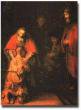
There is something about Rembrandt's The Return of the Prodigal Son that makes feel like never forgetting what the Father has done for me. Time has a way of making us forget what kind of conditions we've been delivered from.
I've been reading the Beatitudes over the last couple days and would like to share some thoughts. I don't believe I will have the kingdom heart the Lord called me to if I depart too far from Matthew 5-7.
Blessed are the poor in spirit:
This word "poor" means destitute. I was spiritually destitute when I came to God. All the riches I have now are based on my continued dependence and faith on him.
Blessed are they that mourn:
I should be broken over my sin. Too often modern theology creeps into my thinking and I justify myself and not God. He showed me how he felt about sin when his son died on the cross. I don't want to trample his mercy under my careless feet.
Blessed are the meek:
Paul defined meekness when he said, "use not you liberty as an occasion to the flesh, but by love serve on another." Kingdom meekness willingly sets aside its rights for another.
Blessed are those who hunger and thirst for righteousness:
God increase my appetite! One of the first things to go in one who is sick and dying is their appetite. I want the spiritual vibrancy that comes from having a holy appetite. This could be seen as a desire for outward holiness.
Blessed are the merciful:
I remember the condition of the unregenerate mind. I know what the dominating power of sin so I should always view my brother from that perspective. Better yet from God's perspective.
Blessed are the pure:
Father let my motivation, thoughts and actions spring from a heart that has been made holy by you blood! Christ calls citizens of the kingdom to inward holiness. Not my will by your will be done.
Blessed are the peacemakers:
to the extent that it is possible I want to live at peace with all men. And when I meet someone who is still an enemy with God (Rom 5) I want to do my best to bring peace and reconciliation.
Blessed are the persecuted (falsely and for righteousness):
It is easy to bear punishment for things I know I deserve. There is actually something cleansing in it (to the conscience). I use to ask my parents to discipline me when I confessed some misdeed. But its altogether a different story when I know I've done nothing wrong and someone slanders me or maligns me in some way. Here is where trust in the king of the kingdom comes in - vengeance is mine, I will repay. Gulp! Do I have the trust and confidence in my God that he will plead my case? I want to. As a lamb to the slaughter is dumb...what an example Christ left us.
We are human beings not human doings. As new creatures with the abiding nature of the father dwelling in us we should naturally grow to have these characteristics.
Friday, November 04, 2005
I was reading Leviticus 26 today and noticed, of course, the blessings associated with obeying God's will. What struck me is the connection between Revelation 6 and Leviticus 26. The curses that would come on the people of God parallel what happen to the church, pictured by the various colored horses in Revelation. The church, following the first century where it went forth conquering, suffered from division (sword). Men, seeking their own fame, divided God's people. Paul prophesied of this in Act 20 when he said, 'even of your ownselves shall some arise speaking perverse things and will draw away disciples after themselves.'
This division created a famine for the word of God. Instead of 'feeding the flock of God' men began to bite and devour each other (like beasts). Instead of planting the word and reaping bread, which could have been used to nourish the people, they spent their time warring. This produced the black horse period of the church where the word of God was measured out to his people. They did not receive the nourishment they needed to fend off disease. In Leviticus, when it describes the period following the sword, it said that the people would flee to the cities for protection. The church that is racked by division will cloister themselves within the walls of a 'city'. In human thinking this would be the appropriate step, but in God's thinking it looks like your attempting to circumvent his correction. He wants his people to be unified, but not in cities of separation from those they're warring against. Instead of protection, the people of these cities starved from lack of bread. Without any source of fresh water or outlet for waste they became diseased.
The pale horse represents the diseased church. It is full of wild beasts not lambs, divisiveness not unity, famine not fullness and disease not health and wholeness. Every church, in every age, in the past, today and in the future will be susceptible to these conditions. What can we do to prevent or overturn these corrections?
First we must repent to God for our divisions and then to each other. Change our occupation from warrior to farmer, from city builder to agrarian. This begins in our homes. This is the church within the church. If I cannot have peace with the spouse who I have seen how can I have peace with one I have not seen. Fathers, mothers and children working in the garden of their home to create, through the help of the Spirit of God, the peaceable fruit of the Spirit.
Secondly, probably concurrently, we begin to seek peace within our local assembly. Look for things that promote peace. No agendas, or soapbox or bully pulpit (Rob, king of the soapbox and lord of the bully pulpit, listen to yourself!). The bible should be promoted. The will of God should be promoted. But everything that is peripheral should be left on the periphery and not made central to our faith. There are truths and then there are saving truths. We need to focus on saving truths. Saving truths will cause division, but its not initiated by the faithful child of God, but by the one who rejects the will of God in his life. I know division can occur when trying to determine a saving truth, but we must not allow it. Trust God for unity.
Finally, when we begin to express the unity that is ordained by God we will reach out to others. Others includes churches in our fellowship so that we can achieve a deeper unity, churches not in our fellowship that are seeking a higher life in Christ and eventually to those that are locked within famine and pestilent ridden churches (Revelation 18). Notice what happens in Leviticus 26 when Moses is talking about the blessings that God would pour out on his people. He said, '5 of you will chase 100 and 100 of you will put 10,000 to flight'. That's a five hundred percent increase in effectiveness when 100 will work together over that of 5.
God will reap the world with people that are willing to abandon their personal liberties and freedoms for others. Love will not continue to draw the sword and build city walls, but will extend itself sacrificially. Let's come out of the city - we may get killed, but that's the pattern the Lord has left us.
This division created a famine for the word of God. Instead of 'feeding the flock of God' men began to bite and devour each other (like beasts). Instead of planting the word and reaping bread, which could have been used to nourish the people, they spent their time warring. This produced the black horse period of the church where the word of God was measured out to his people. They did not receive the nourishment they needed to fend off disease. In Leviticus, when it describes the period following the sword, it said that the people would flee to the cities for protection. The church that is racked by division will cloister themselves within the walls of a 'city'. In human thinking this would be the appropriate step, but in God's thinking it looks like your attempting to circumvent his correction. He wants his people to be unified, but not in cities of separation from those they're warring against. Instead of protection, the people of these cities starved from lack of bread. Without any source of fresh water or outlet for waste they became diseased.
The pale horse represents the diseased church. It is full of wild beasts not lambs, divisiveness not unity, famine not fullness and disease not health and wholeness. Every church, in every age, in the past, today and in the future will be susceptible to these conditions. What can we do to prevent or overturn these corrections?
First we must repent to God for our divisions and then to each other. Change our occupation from warrior to farmer, from city builder to agrarian. This begins in our homes. This is the church within the church. If I cannot have peace with the spouse who I have seen how can I have peace with one I have not seen. Fathers, mothers and children working in the garden of their home to create, through the help of the Spirit of God, the peaceable fruit of the Spirit.
Secondly, probably concurrently, we begin to seek peace within our local assembly. Look for things that promote peace. No agendas, or soapbox or bully pulpit (Rob, king of the soapbox and lord of the bully pulpit, listen to yourself!). The bible should be promoted. The will of God should be promoted. But everything that is peripheral should be left on the periphery and not made central to our faith. There are truths and then there are saving truths. We need to focus on saving truths. Saving truths will cause division, but its not initiated by the faithful child of God, but by the one who rejects the will of God in his life. I know division can occur when trying to determine a saving truth, but we must not allow it. Trust God for unity.
Finally, when we begin to express the unity that is ordained by God we will reach out to others. Others includes churches in our fellowship so that we can achieve a deeper unity, churches not in our fellowship that are seeking a higher life in Christ and eventually to those that are locked within famine and pestilent ridden churches (Revelation 18). Notice what happens in Leviticus 26 when Moses is talking about the blessings that God would pour out on his people. He said, '5 of you will chase 100 and 100 of you will put 10,000 to flight'. That's a five hundred percent increase in effectiveness when 100 will work together over that of 5.
God will reap the world with people that are willing to abandon their personal liberties and freedoms for others. Love will not continue to draw the sword and build city walls, but will extend itself sacrificially. Let's come out of the city - we may get killed, but that's the pattern the Lord has left us.
Subscribe to:
Posts (Atom)
